
The BJP has accused the Congress of spreading "fake news" regarding UPI transaction charges, asserting that the government has clarified that consumers will not be levied merchant discount rate (MDR) charges. This comes after the Congress criticised a government notification, alleging it paves the way for imposing fees on UPI transactions. The BJP has strongly refuted these claims, highlighting that most UPI transactions remain free and the government provides incentives to maintain a charge-free ecosystem for users.

'You have to get private investment to somewhere between 35% to 36% of GDP. It is hovering about 30%-31%.'

The Indian government has introduced a 0.4% fee on UPI transactions above Rs 2,000 for merchants, effective October 15, sparking strong opposition from political parties and traders. Despite accusations of foreign influence and demands for a rollback, the finance ministry and top functionaries have stated there will be no reversal, citing the need for a self-sustaining digital payments ecosystem.

Civil Aviation Minister Kinjarapu Rammohan Naidu stated that no decision has been made regarding allowing Delhi and Mumbai airport operators to own and run airlines, as the government is carefully considering the implications of relaxing cross-ownership restrictions, including potential conflicts of interest and the need for more airlines.

India's proposal to link BRICS payment systems, including central-bank digital currencies (CBDCs), was notably absent from the grouping's New Delhi Declaration, despite being a key agenda item for India's chairmanship. This omission leaves the 16-year effort for trade in local currencies without a settled payment architecture, with the declaration only 'acknowledging' the work of the BRICS Payment Task Force.

The BRICS New Delhi Declaration condemned the April 2025 terror attack in Pahalgam, Jammu and Kashmir, advocating for zero tolerance towards state-sponsored cross-border terrorism. The declaration also addressed global terror, illegal financial flows, cyber fraud, and emphasised accountability for those involved in terror activities.

The Congress party has criticised the government's new 0.4% charge on UPI transactions above Rs 2,000 for merchants, terming it a "Modi tax". Opposition leaders, including Rahul Gandhi and Mallikarjun Kharge, allege that this move will ultimately burden consumers through price hikes and accuse the government of succumbing to American pressure to dilute India's zero-MDR policy. The government states the charge will support banks and fintechs.

Prime Minister Narendra Modi's 76th birthday was celebrated with extensive programmes in Varanasi, his Lok Sabha constituency. Events included special prayers by 76 young priests, a milk 'abhishek' of the Ganga, and a significant 'Seva Sankalp' motorcycle journey from Varanasi to Vadnagar, Modi's birthplace, involving 500 participants. Several prominent political figures, including Defence Minister Rajnath Singh and Uttar Pradesh Chief Minister Yogi Adityanath, participated in the celebrations, offering prayers for Modi's health and India's progress.

The Congress party has criticised the Modi government over a notification regarding UPI transactions, alleging it paves the way for imposing fees, especially on transactions above Rs 2,000. Rahul Gandhi claimed the government is surrendering to American pressure, while Mallikarjun Kharge highlighted the potential burden on common citizens amidst inflation. The government's notification prohibits charges on UPI transactions up to Rs 2,000 but remains silent on higher amounts, sparking fears of a "Digital Payments Tax."
The Congress party has strongly criticised the Modi government's decision to introduce a 0.4% Merchant Discount Rate (MDR) on UPI transactions over Rs 2,000, alleging it is a result of US pressure to benefit American card companies. The party also linked this move to broader US actions against India, including tariffs and H-1B visa issues, coining the term "Narendra's Ongoing Trump Appeasement." The government, however, clarified that consumers will not bear the charge, which applies only to merchants.

'The way the government behaves, sometimes I ask myself: Are not Tamils Sri Lankans too? Why do you discriminate so much?'
The Congress party has accused the Modi government of succumbing to US pressure by introducing a 0.4% Merchant Discount Rate (MDR) on UPI transactions over Rs 2,000 for merchants. The party alleges this move aims to benefit US card companies and links it to broader US actions against India, including tariffs and H-1B visa issues. The government, however, clarifies that consumers will not be charged.

The BRICS grouping has fully endorsed India's demand for zero-tolerance against terrorism and rejected double standards in combating the menace. Their declaration condemned terror attacks in Jammu and Kashmir and reaffirmed commitment to holding terrorists accountable under international law.

'Propaganda films that the BJP makes, whether it's The Kerala Story or others, are shown wherever elections occur as part of their propaganda. But real-time human rights violations... If such things don't come on a public platform, how will correction occur?'

RBI Governor Sanjay Malhotra stated that the central bank consistently views fintechs as 'valuable partners' in shaping India's future financial system, crediting the sector with expanding financial inclusion, enhancing customer experience, and streamlining credit delivery, particularly for MSMEs.

Former Rajasthan chief minister Ashok Gehlot has criticised the Centre for introducing a 0.4% charge on UPI transactions above Rs 2,000, alleging the decision was influenced by pressure from the United States and its payment companies like Visa and Mastercard. He highlighted a perceived shift in the government's stance on Merchant Discount Rate (MDR) for UPI, claiming it would ultimately burden consumers and small businesses while benefiting American firms.

Nepal has launched a diplomatic initiative to secure climate-related compensation from major greenhouse gas emitters, asserting that post-disaster assistance for recent deadly flash floods should be viewed as a moral and legal liability, not charity. Foreign Minister Shisir Khanal highlighted Nepal's disproportionate suffering from global warming despite negligible emissions, citing rapid glacier melt and extreme mountain disasters. The country has formally approached the Loss and Damage Fund board for urgent financial aid following a catastrophic flash flood in the Bhotekoshi river basin.

Finance Minister Nirmala Sitharaman has urged income tax authorities to significantly accelerate the adjudication of taxpayer appeals.

Former NITI Aayog vice-chairman Rajiv Kumar has urged the government to maintain zero-fee UPI transactions for several more years, arguing that the benefits of UPI as a public good outweigh the costs. This comes amidst the government's recent decision to introduce a 0.4% fee on person-to-merchant UPI transactions above Rs 2,000 from October 15, a move that has drawn criticism.

Russian President Vladimir Putin is set to visit India for a three-day trip to attend the 18th BRICS Summit and engage in bilateral discussions with Prime Minister Narendra Modi. The summit will focus on strengthening strategic partnerships and addressing international issues, with Putin also scheduled to meet other world leaders.

The UK has announced a comprehensive sanctions regime against Israeli settlements in the West Bank, banning the import of goods and targeting entities involved in settlement expansion. Foreign Secretary Ed Miliband condemned the "ethnic cleansing of Palestinians" and highlighted international support for the UK's stance, while Israel reacted strongly with counter-measures.

Chief Election Commissioner Gyanesh Kumar is facing significant scrutiny after an investigation revealed objections from his fellow election commissioners, Sukhbir Singh Sandhu and Vivek Joshi, regarding decisions made during the Special Intensive Revision of voter lists. The objections, reportedly made at least 14 times, concerned issues like changes to voter registration forms and centralised control over electoral roll databases, intensifying criticism of Kumar's tenure and the EC's impartiality.
The Indian government has introduced a 0.4% Merchant Discount Rate (MDR) on UPI person-to-merchant (P2M) transactions exceeding Rs 2,000, effective October 15. This move ends nearly six years of fully free UPI payments, though person-to-person (P2P) transfers and small P2M payments remain free. The charges aim to bolster investment in UPI infrastructure, with specific exemptions and caps for essential sectors.

The Indian government has introduced a 0.4% transaction fee on UPI payments above Rs 2,000 for merchants, effective October 15, sparking a political row. The Congress party has labelled it a "Modi tax" and accused the government of succumbing to US pressure, while the BJP has defended the move, clarifying that consumers will not be charged and small vendors are protected. The finance ministry reiterated that the charge is on merchants, not customers.

Opposition parties, including Congress, TMC, and RJD, have strongly criticised the government's decision to impose a 0.4% Merchant Discount Rate (MDR) on UPI transactions exceeding Rs 2,000 made to merchants. They allege the move is a result of "American imperialism" and will lead to increased commodity prices, while the government maintains the charge is on merchants and not consumers, with person-to-person transactions remaining free.

For India, the goal is not simply to host another grand diplomatic gathering. It is to prove that a diverse coalition of emerging powers can still deliver.

The opposition has intensified its criticism of the government's decision to impose a 0.4 per cent Merchant Discount Rate (MDR) on UPI transactions above Rs 2,000, effective October 15. Leaders like Rahul Gandhi and Jairam Ramesh allege the move is a result of US pressure, particularly from American card companies, and demand an immediate rollback, warning of increased costs for consumers.
The opposition has strongly criticised the government's decision to introduce a 0.4% Merchant Discount Rate (MDR) on UPI transactions above Rs 2,000 for merchants, effective October 15. They allege the move is a result of US pressure and will lead to increased commodity prices, calling it a "betrayal" of the common man. The government, however, clarifies that customers will not be charged, and the MDR applies only to merchants for larger transactions.
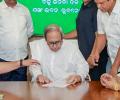
BJD chief Naveen Patnaik has voiced concerns over the Centre's decision to introduce Merchant Discount Rate (MDR) charges on UPI transactions above Rs 2,000 from October 15, urging protection for small traders and common people. This move has sparked a political debate, with the BJP defending the charges as beneficial for digital infrastructure and largely not impacting consumers, while the Congress and traders' associations criticise it as an additional burden.

The Yogi Adityanath government in Uttar Pradesh has amended the Maintenance and Welfare of Parents and Senior Citizens Rules-2014. This amendment allows elderly parents to evict children from their property if they fail to maintain and respect them. The new provisions include a clear eviction procedure, a toll-free number for assistance, and a 30-day complaint resolution period, aiming to safeguard senior citizens' rights and promote family care.

South African President Cyril Ramaphosa on Friday described BRICS as an important global forum, highlighting the grouping's growing demographic and economic weight and noting that its members account for around half of the world's population and 40 percent of global GDP.

Sashidhar Jagdishan, the managing director and CEO of HDFC Bank, has announced his decision not to seek reappointment and will retire at the end of his current term on October 26, concluding a six-year tenure marked by significant regulatory and governance challenges, including RBI restrictions, a major merger, and scrutiny over alleged illegal payments.

A Delhi court has ordered the framing of money laundering charges against former railway minister Lalu Prasad Yadav, his wife Rabri Devi, son Tejashwi Yadav, and six others in the alleged IRCTC hotel scam. The court found strong suspicion of a manipulated tender for railway hotels and a quid pro quo involving land transfer at undervalued rates.

Vijay's Jana Nayagan releases in theatres, and fans just can't keep calm!

'It is a blunt and dangerous attempt to pressure India to sign BTA on one-sided terms.'

Cricket Australia has announced that private investment will be introduced into the Big Bash League (BBL) from the 2027-28 season, beginning with the sale of the Melbourne Renegades T20 franchise, a move aimed at strengthening the league's long-term future and boosting finances.

Chinese President Xi Jinping's upcoming visit to India for the BRICS summit is a pivotal diplomatic event poised to significantly impact bilateral ties and global cooperation amidst ongoing international instability.
CPI(ML) Liberation general secretary Dipankar Bhattacharya has strongly criticised the newly introduced Merchant Discount Rate (MDR) on select UPI transactions, labelling it a "UPI tax" and demanding its immediate rollback. He drew parallels with demonetisation, arguing that the new framework would negatively impact small shopkeepers, MSMEs, and ordinary citizens by increasing prices.

The highlight of the successful BRICS Summit was its ability to deliver a joint statement that all members, including Iran and the United Arab Emirates, embroiled in the war in West Asia, signed.

Iranian President Masoud Pezeshkian declared that Iran will not succumb to "bullying" from the US and Israel, vowing to protect national interests amidst escalating West Asian hostilities. During his visit to New Delhi for the BRICS summit, Pezeshkian also discussed strengthening bilateral ties with Prime Minister Narendra Modi and advocated for local currencies in BRICS trade, positioning Iran as a strategic energy and transport partner.
